Frisco, TX · Collin County
Basement Water Damage Restoration in Frisco, TXBasement Sewer Backup Cleanup & Emergency Basement Flood Cleanup
Basement Water Damage Restoration in Frisco runs from basement water extraction and basement floor water removal to basement dehumidification.
Answered 24/7
Professional Basement Water Damage Restoration in Frisco, TX
Water in a basement does not stay on the floor. It wicks up drywall, soaks insulation and seeps into wood framing. In Frisco, a few inches of water can damage walls up to two feet high.
Few homes in Frisco are built with basements, so these steps are usually applied to the lowest rooms of a house, a garage or a crawl space instead.
Homes in Frisco and nearby The Colony, Prosper and Little Elm with basements deal with seepage, plumbing leaks and sewer backups. Help with basement water damage restoration covers pumping, removal of wet materials and drying of walls and concrete.
The Basement Water Damage Restoration Process in Frisco
Basement Sewer Backup Cleanup
Porous materials touched by sewage, such as carpet, pad and lower drywall, are removed. Concrete and framing are cleaned and disinfected.
Emergency Basement Flood Cleanup
A flooded basement can damage furnaces, water heaters and stored items quickly. Fast pumping limits how much is lost.
Basement Floor Water Removal
A slab can look dry on top while still holding water. Moisture readings show when it is ready for new flooring.
Basement Wall Drying
Concrete and block walls are dried with directed airflow and dehumidifiers, and checked with meters until readings drop.
Basement Water Extraction
Extraction starts at the lowest point, often near the floor drain or sump, and works outward until no pooled water remains.
How to Know You Need Basement Water Damage Restoration in Frisco
Mold on Surfaces
Dark spots on drywall, framing or stored boxes mean the area has stayed wet for days.
Condensation on Windows or Pipes
Water beading on cold pipes or basement windows shows high humidity that keeps materials damp.
Wet or Stained Basement Walls
Dark, wet patches or tide lines on basement walls show where water seeped in or wicked up.
Rusted Appliances or Pipes
Rust on the water heater, furnace base or pipes points to repeated moisture or past flooding.
How Basement Water Damage Restoration Works in Frisco
Step 1: Water Removal
Pumps and extractors remove standing water from the basement floor, starting at the lowest point.
Step 2: Targeted Moisture Evaporation
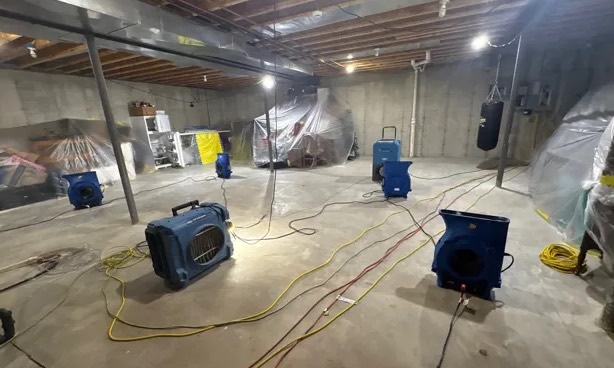
Air movers are aimed at wet walls, framing and the slab to speed evaporation.
Step 3: Humidity Control
Large dehumidifiers pull moisture from the basement air, with readings checked every day.
Step 4: Final Verification and Restoration
Final readings confirm the basement is dry, and the space is ready for drywall and flooring repairs.
What Causes Basement Water Damage Restoration in Frisco
Window Well Flooding
Window wells without drains or covers fill with rain and leak through basement windows.
Plumbing Pipe Bursts or Leaks
Supply lines and drain pipes in basement ceilings can crack or burst onto the floor below.
Faulty Basement Waterproofing
Old or failed waterproofing on foundation walls lets water through during wet weather.
Water Heater or Appliance Leaks
Water heaters, washers and utility sinks in the basement can leak or fail without warning.
Both Residential & Commercial Basement Water Damage Restoration in Frisco
Residential Basement Water Damage Restoration
Homeowners with older basements may have seepage that returns with each storm. Drying fixes the current damage, and the source is noted for a waterproofing contractor.
Commercial Basement Water Damage Restoration
Apartment and condo buildings with shared basements or lower levels may have laundry and storage below grade. Each area is extracted, dried and recorded for the building manager.
DIY vs. Professional Basement Water Damage Restoration in Frisco
Fans alone can push damp air into the rest of the house. Basement drying needs dehumidifiers to pull the moisture out of the air and the concrete.
Cost Considerations for Basement Water Damage Restoration in Frisco
Waterproofing or sump pump replacement is a separate cost from water removal and drying. In Frisco, both may be needed to prevent a repeat.
Access Complexity
Narrow stairs, low ceilings and stored contents can make the work slower.
Water Category
Clean water costs less to handle than sewage, which needs protective gear, removal and disinfection.
Drying Time Required
Basements dry slowly, and longer drying means more equipment days and monitoring visits.
Does Insurance Cover Basement Water Damage Restoration?
Photos, moisture readings and drying logs from local water damage pros help support an insurance claim for basement water damage in Frisco.
Why Choose Local Pros for Basement Water Damage Restoration in Frisco
Industry Drying Standards
Drying follows industry water damage standards, with readings taken at every visit.
Water Type Handling
Clean water, gray water and sewage are each handled with the right protection and removal steps.
Containment Strategies
Plastic sheeting keeps contaminated areas separate from clean parts of the house.
24/7 Emergency Basement Water Damage Restoration in Frisco
Sewage coming up through a floor drain? Stop using water in the house and call (972) 736-7408 now for basement water damage restoration in Frisco.
Call Now (972) 736-7408Regions Served for Basement Water Damage Restoration Near Frisco
Nearby areas served for basement water damage restoration include The Colony, Prosper and Little Elm, with the same pumping and drying steps used in Frisco.
- Basement Water Damage Restoration in The Colony
- Basement Water Damage Restoration in Prosper
- Basement Water Damage Restoration in Little Elm
- Basement Water Damage Restoration in Allen
- Basement Water Damage Restoration in Providence Village
- Basement Water Damage Restoration in Celina
- Basement Water Damage Restoration in Plano
- Basement Water Damage Restoration in McKinney
- Emergency Damage Restoration in 75033
- Storm Damage Restoration in 75033
- Water Damage Restoration in 75033
- Water Extraction Service in 75033
- Water Leak Detection in 75033
- Water Removal Service in 75033
- Emergency Damage Restoration in 75034
- Storm Damage Restoration in 75034
Frequently Asked Questions About Basement Water Damage Restoration
Why is quick action important for below-grade flood restoration?
Basements dry slowly, so every hour of standing water adds days of drying and more material to replace.
Why is dehumidification so important after basement water removal?
Basements hold moisture in the air and concrete. Without dehumidifiers, walls and framing stay damp long after the water is gone.
What does below-grade moisture removal include beyond pumping?
Extracting carpet and pad, opening wet walls, running air movers and dehumidifiers, and checking readings until dry.
How long does below-grade drying take after a flood?
Often several days or longer, since concrete and cool basement air dry slowly. Daily readings show progress.
How soon should I call for basement water extraction after a leak?
Right away. Water wicks up drywall and soaks framing within hours, and below-grade spaces are slow to dry.