McKinney, TX · Collin County
Basement Water Removal in McKinney, TXEmergency Basement Flooding & Basement Floor Water Damage
After a burst pipe or storm, Basement Water Removal in McKinney means basement water pump out, basement wall drying and basement drying services.
Answered 24/7
Local Basement Water Removal Services for McKinney
Basement Water Removal in McKinney protects more than the floor. Furnaces, water heaters, washers and stored belongings in the basement can all be damaged by standing water.
Few homes in McKinney have basements, so this work usually covers the lowest part of a home: a sunken room, a below-grade garage, a utility room or a crawl space.
A single storm or burst pipe in McKinney can flood a basement. Local basement drying experts serve McKinney and nearby Fairview, Melissa and Princeton, with help available around the clock.
Comprehensive Basement Water Removal Solutions
Emergency Basement Flooding
Emergency response starts with making power safe, stopping the source if possible and pumping out the water.
Basement Floor Water Damage
Concrete floors are squeegeed, extracted and dried with airflow and dehumidifiers until moisture readings drop.
Basement Moisture Inspection
Readings are recorded at each visit, giving you and your insurer a clear record of the drying.
Basement Wall Drying
Basement walls are checked with moisture meters. Wet drywall is cut back above the water line, and insulation behind it is removed.
Basement Water Pump Out
A pump-out removes standing water from the basement with submersible pumps, discharging it outside and away from the foundation.
Indicators You Need Professional Water Removal
Soggy or Wet Carpeting
Carpet that feels damp or smells sour is holding water in the pad against the concrete.
Water Stains on Walls or Ceiling
Stains on lower walls or the ceiling below a bathroom or kitchen point to a leak.
Efflorescence on Concrete Walls
White, powdery deposits on concrete walls mean water is passing through the masonry.
Gurgling Sounds From Drains
Gurgling floor drains or slow drains can be an early sign of a sewer line problem.
How Basement Water Removal Works in McKinney
Step 1: First Call and Initial Assessment
The source, the type of water and the depth are checked, and the water level is photographed.
Step 2: Bulk Water and Contaminant Removal
Pumps remove standing water, and carpet, pad or drywall touched by dirty water is removed.
Step 3: Drying With Monitoring
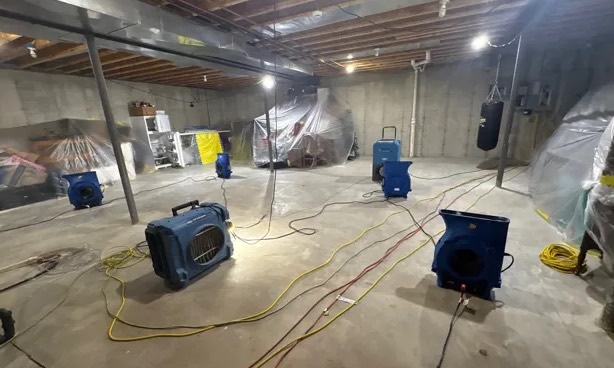
Dehumidifiers and air movers run around the clock, with readings logged every day on walls and slab.
Step 4: Post-Drying Evaluation and Documentation
Final readings and photos are compiled to show the basement is dry and what was removed.
Sources of Basement Water Problems
Appliance Malfunctions and Overflows
Washers, utility sinks and water softeners in the basement can overflow or leak.
Plumbing Leaks or Pipe Bursts
Supply lines, drain pipes and water heaters in the basement can leak or burst onto the floor.
Foundation Cracks and Seepage
Cracks in foundation walls and the slab let groundwater seep in during wet weather.
Sewer Line Backups and Blockages
A blocked sewer line can push wastewater up through basement floor drains and toilets.
Basement Water Removal for Homes and Businesses
Residential Basement Water Removal
Finished basements used as bedrooms or family rooms need careful moisture checks behind walls and under flooring, since that is where water hides.
Commercial Basement Water Removal
Businesses with below-grade storage need wet inventory moved out and documented. Drying is planned around daily operations wherever possible.
Why DIY Basement Water Removal Often Fails in McKinney
A small puddle on bare concrete can be handled with a wet vac, towels and a dehumidifier. Call local basement drying experts if water reached carpet, drywall or framing, or covers much of the floor.
Investing in Professional Basement Water Removal
The pros look at water depth, water type and basement finishes before pricing basement water removal in McKinney, then explain the scope.
Contamination Level
Sewage or dirty water needs protective gear, removal and disinfection, which costs more.
Access and Complexity
Narrow stairs, low ceilings and crowded storage areas make the work slower and longer.
Drying Time Required
Basements dry slowly, and each extra day of equipment adds to the total.
Does Insurance Cover Basement Water Removal?
Coverage for basement water removal depends on the water source and your policy. The pros document the damage and drying, and your insurer decides what is covered.
Why Choose Local Pros for Basement Water Removal in McKinney
Contamination Safety Protocols
Sewage and dirty water are handled with protective gear, containment and disinfection.
Moisture Inspection
Meters and thermal cameras find water in walls, floors and slab that looks dry.
Detailed Damage Documentation
Photos, readings and drying logs are kept to support your insurance claim.
24/7 Basement Water Removal When You Need It
The faster a basement is pumped out, the more can be saved. Call (972) 736-7408 for basement water removal in McKinney as soon as you see water.
Call Now (972) 736-7408Communities Served for Basement Water Removal
Need basement water removal outside McKinney? Service also covers Fairview, Melissa and Princeton, including emergency help during storms.
- Basement Water Removal in Fairview
- Basement Water Removal in Melissa
- Basement Water Removal in Princeton
- Basement Water Removal in Allen
- Basement Water Removal in Lucas
- Basement Water Removal in Anna
- Basement Water Removal in Prosper
- Basement Water Removal in Celina
- Emergency Damage Restoration in 75069
- Storm Damage Restoration in 75069
- Water Damage Restoration in 75069
- Water Extraction Service in 75069
- Water Leak Detection in 75069
- Water Removal Service in 75069
- Emergency Damage Restoration in 75070
- Storm Damage Restoration in 75070
Basement Water Removal FAQs
How long does basement drying take?
Often several days or longer, because concrete and cool basement air hold moisture. Daily readings show when it is done.
What causes basement floor water damage?
Storm seepage, burst pipes, appliance leaks, foundation cracks and sewer backups through floor drains are the usual sources.
How is contaminated water handled in a basement?
With protective gear, containment, removal of porous materials and disinfection of hard surfaces before drying.
What is the difference between a pump out and extraction?
A pump out removes deep standing water. Extraction pulls the remaining water from carpet, pad and floors.
Can wet drywall in a basement be saved?
Sometimes, if the water was clean and removed quickly. Soaked or contaminated drywall is cut out above the water line.