Lancaster, TX · Dallas County
Basement Water Removal in Lancaster, TXBasement Wall Drying & Basement Floor Water Damage
Get basement water removal in Lancaster for emergency basement flooding, basement water pump out and basement floor water damage.
Answered 24/7
Professional Basement Water Removal in Lancaster, TX
In Lancaster, a finished basement or lower level takes more work after a flood. Carpet, pad, laminate, drywall and insulation all trap water against the concrete and framing.
Few homes in Lancaster have basements, so this work usually covers the lowest part of a home: a sunken room, a below-grade garage, a utility room or a crawl space.
A finished basement or lower level in Lancaster or DeSoto, Red Oak and Glenn Heights can hide water under flooring and behind drywall. The pros find and remove it before it causes lasting damage.
Specialized Basement Water Removal for Lancaster
Basement Wall Drying
Basement walls are checked with moisture meters. Wet drywall is cut back above the water line, and insulation behind it is removed.
Basement Floor Water Damage
Concrete floors are squeegeed, extracted and dried with airflow and dehumidifiers until moisture readings drop.
Basement Dehumidification
After drying, a household dehumidifier may still be needed to keep basement humidity in a healthy range.
Basement Drying Services
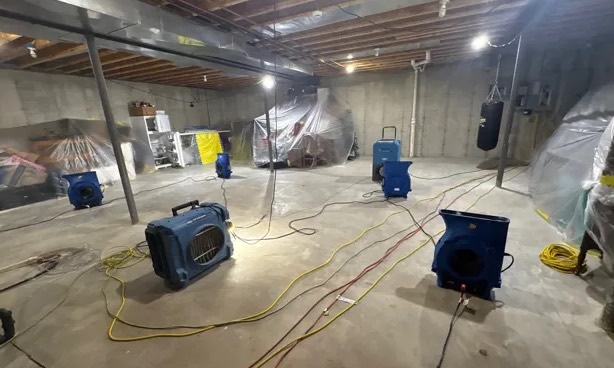
After pumping, air movers and dehumidifiers dry the walls, framing and slab. Readings are taken daily until every surface is back to normal.
Basement Moisture Inspection
Readings are recorded at each visit, giving you and your insurer a clear record of the drying.
Indicators You Need Professional Water Removal
Water Stains on Walls or Ceiling
Stains on lower walls or the ceiling below a bathroom or kitchen point to a leak.
Rusted Appliances or Furniture
Rust on appliance bases, furniture legs or metal shelving points to standing water or long-term dampness.
Soggy or Wet Carpeting
Carpet that feels damp or smells sour is holding water in the pad against the concrete.
Mold or Mildew
Dark spots on drywall, framing or stored items mean the area has stayed wet for days.
How Basement Water Removal Works in Lancaster
Step 1: Emergency Water Extraction
Power is made safe, then pumps and extractors remove standing water from the basement floor.
Step 2: Detailed Moisture Inspection
Meters map wet walls, framing and slab areas, including behind finished walls and under flooring.
Step 3: Drying and Dehumidification
Air movers and large dehumidifiers run continuously, with readings checked every day.
Step 4: Final Verification and Monitoring
Readings are compared to dry areas, and equipment is removed only when the basement tests dry.
Common Causes of Basement Water Damage in Lancaster
Clogged or Damaged Gutters
Clogged gutters and short downspouts dump roof water right next to the foundation.
Improper Landscape Grading
Soil that slopes toward the house directs rainwater straight to the basement walls.
Appliance Malfunctions and Overflows
Washers, utility sinks and water softeners in the basement can overflow or leak.
Sewer Line Backups and Blockages
A blocked sewer line can push wastewater up through basement floor drains and toilets.
Professional Basement Water Removal for All Properties
Residential Basement Water Removal
Finished basements used as bedrooms or family rooms need careful moisture checks behind walls and under flooring, since that is where water hides.
Commercial Basement Water Removal
Businesses with below-grade storage need wet inventory moved out and documented. Drying is planned around daily operations wherever possible.
The Risks of DIY Basement Water Removal
Water that came up through a floor drain may be sewage. Avoid touching it, keep children and pets away and call local basement water removal pros for cleanup with protective gear and disinfection.
What Influences the Price of Basement Water Removal
Sewage cleanup, finished walls, after-hours calls and damaged appliances all add to the total for basement water removal in Lancaster.
Access and Complexity
Narrow stairs, low ceilings and crowded storage areas make the work slower and longer.
Contamination Level
Sewage or dirty water needs protective gear, removal and disinfection, which costs more.
Time of Service
Night, weekend and storm calls can cost more than a scheduled weekday visit.
Does Insurance Cover Basement Water Removal?
Coverage for basement water removal depends on the water source and your policy. The pros document the damage and drying, and your insurer decides what is covered.
Benefits of Hiring Local Pros for Basement Water Removal in Lancaster
24/7 Emergency Response
Help is available day or night when water is rising in the basement.
Moisture Inspection
Meters and thermal cameras find water in walls, floors and slab that looks dry.
Methodical Water Removal Process
Water is removed in a set order: pump-out, extraction, removal of soaked materials, then drying.
Emergency Basement Flood Response in Lancaster
Storm night, weekend or holiday, local basement water removal pros handle basement water in Lancaster. Call (972) 736-7408 to get pumps running and drying started.
Call Now (972) 736-7408Basement Water Removal Near Lancaster: Areas Served
Need basement water removal outside Lancaster? Service also covers DeSoto, Red Oak and Glenn Heights, including emergency help during storms.
- Basement Water Removal in DeSoto
- Basement Water Removal in Red Oak
- Basement Water Removal in Glenn Heights
- Basement Water Removal in Duncanville
- Basement Water Removal in Balch Springs
- Basement Water Removal in Seagoville
- Basement Water Removal in Mesquite
- Basement Water Removal in Grand Prairie
- Emergency Damage Restoration in 75134
- Storm Damage Restoration in 75134
- Water Damage Restoration in 75134
- Water Extraction Service in 75134
- Water Leak Detection in 75134
- Water Removal Service in 75134
- Emergency Damage Restoration in 75146
- Storm Damage Restoration in 75146
Common Basement Water Removal Questions Answered
How is contaminated water handled in a basement?
With protective gear, containment, removal of porous materials and disinfection of hard surfaces before drying.
What equipment is used for basement water extraction?
Submersible pumps, extractors, wet vacs, air movers, large dehumidifiers and moisture meters to confirm drying.
What is emergency basement flooding response?
Help any hour to make power safe, stop the source, pump out water and start drying before more damage sets in.
What should I do right after basement flooding?
Make power safe, avoid sewage, move belongings above the water, take photos and call for water removal.
Why is basement dehumidification important after pumping?
Walls and concrete keep releasing moisture for days. Dehumidifiers remove it so the basement does not stay damp.