Crandall, TX · Kaufman County
Basement Water Damage Restoration in Crandall, TXBasement Mold Prevention & Basement Wall Drying
Basement Water Damage Restoration in Crandall includes emergency basement flood cleanup, basement sewer backup cleanup and basement wall drying.
Answered 24/7
Professional Basement Water Damage Restoration in Crandall, TX
Basements collect water from every direction: rain seeping through walls, groundwater pushing up through the slab, sewage backing up through floor drains and pipes bursting overhead. In a Crandall home with a basement or below-grade room, any of these can leave inches of water on the floor.
Few homes in Crandall are built with basements, so these steps are usually applied to the lowest rooms of a house, a garage or a crawl space instead.
In Crandall, a home with a basement or below-grade room can flood after heavy rain or a blocked sewer line. Local water removal pros serve Crandall, Seagoville, Forney and Scurry, pumping out water and drying finished and unfinished spaces.
The Basement Water Damage Restoration Process in Crandall
Basement Mold Prevention
After drying, an antimicrobial can be applied to framing and concrete that were wet, to slow mold on surfaces that stay in place.
Basement Wall Drying
Wet drywall is cut back above the water line when it is soaked, and the wall cavity and insulation behind it are dried or replaced.
Basement Drying Services
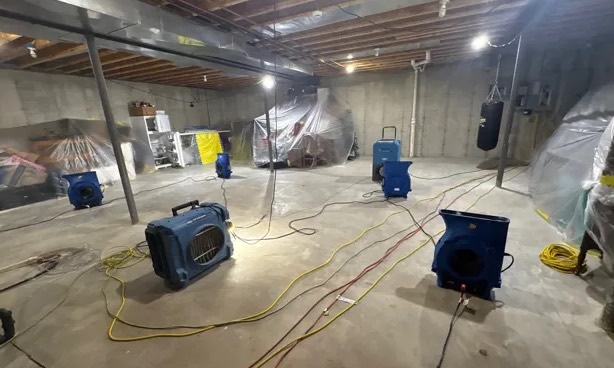
Air movers and dehumidifiers are placed to dry walls, framing and the slab. Below-grade rooms dry slowly, so readings are taken daily.
Emergency Basement Flood Cleanup
Emergency cleanup starts with stopping the source where possible, checking for electrical hazards and pumping out the water.
Basement Floor Water Removal
Wet carpet pad is removed from basement floors, since it holds water against the concrete and dries poorly.
Indicators for Basement Water Damage Restoration in Crandall
Condensation on Windows or Pipes
Water beading on cold pipes or basement windows shows high humidity that keeps materials damp.
Damp or Musty Odors
A damp, earthy or musty smell in the basement often means hidden moisture in walls, carpet or the slab.
Mold on Surfaces
Dark spots on drywall, framing or stored boxes mean the area has stayed wet for days.
Peeling Paint or Wallpaper
Paint that peels or blisters on basement walls often has moisture behind it.
How Basement Water Damage Restoration Works in Crandall
Step 1: Floodwater Pump-Out
Submersible pumps remove deep water, and electrical hazards are checked before anyone walks in it.
Step 2: Deep Moisture Extraction
Extractors pull water from carpet, pad and the concrete floor after the deep water is gone.
Step 3: Air Circulation and Drying
Air movers keep dry air moving across walls and floors throughout the basement.
Step 4: Dehumidification and Verification
Dehumidifiers run until humidity and material readings confirm the basement is dry.
What Causes Basement Water Damage Restoration in Crandall
Water Heater or Appliance Leaks
Water heaters, washers and utility sinks in the basement can leak or fail without warning.
Window Well Flooding
Window wells without drains or covers fill with rain and leak through basement windows.
Plumbing Pipe Bursts or Leaks
Supply lines and drain pipes in basement ceilings can crack or burst onto the floor below.
Clogged Floor Drains
A floor drain blocked by debris cannot carry off water from a leak or overflow, so it spreads across the basement floor.
Residential and Commercial Basement Water Damage Restoration in Crandall
Residential Basement Water Damage Restoration
Finished basements used as living space need carpet, pad and lower drywall checked carefully. Soaked materials are removed so the walls and slab can dry.
Commercial Basement Water Damage Restoration
Businesses with below-grade storage need inventory moved out of the water quickly. Wet stock is separated and documented for insurance.
DIY vs. Professional Basement Water Damage Restoration in Crandall
Keeping gutters and downspouts clear and checking water heater and washer hoses are good DIY steps before storm season. Once water is on the floor, call (972) 736-7408.
Understanding Basement Water Damage Restoration Pricing in Crandall
Before pricing basement water damage restoration in Crandall, the pros check the water depth, the type of water and what the basement is finished with.
Access Complexity
Narrow stairs, low ceilings and stored contents can make the work slower.
Water Category
Clean water costs less to handle than sewage, which needs protective gear, removal and disinfection.
Drying Time Required
Basements dry slowly, and longer drying means more equipment days and monitoring visits.
Does Insurance Cover Basement Water Damage Restoration?
Coverage for basement water damage restoration depends on where the water came from and your policy terms. The pros document the damage, and your insurer decides what is covered.
Benefits of Local Pros for Basement Water Damage Restoration in Crandall
Containment Strategies
Plastic sheeting keeps contaminated areas separate from clean parts of the house.
Industrial-Grade Equipment
Pumps, extractors and large dehumidifiers remove water much faster than household wet vacs and fans.
Advanced Moisture Detection
Moisture meters and thermal cameras find water in walls and slabs that looks dry.
24/7 Emergency Basement Water Damage Restoration in Crandall
Sewage coming up through a floor drain? Stop using water in the house and call (972) 736-7408 now for basement water damage restoration in Crandall.
Call Now (972) 736-7408Basement Water Damage Restoration Near Crandall: Areas Served
Help with basement water damage restoration reaches Seagoville, Forney and Scurry, plus other communities around Crandall, for finished and unfinished basements alike.
- Basement Water Damage Restoration in Seagoville
- Basement Water Damage Restoration in Forney
- Basement Water Damage Restoration in Scurry
- Basement Water Damage Restoration in Kaufman
- Basement Water Damage Restoration in Balch Springs
- Basement Water Damage Restoration in Sunnyvale
- Basement Water Damage Restoration in Mesquite
- Basement Water Damage Restoration in Terrell
- Emergency Damage Restoration in 75114
- Storm Damage Restoration in 75114
- Water Damage Restoration in 75114
- Water Extraction Service in 75114
- Water Leak Detection in 75114
- Water Removal Service in 75114
Your Basement Water Damage Restoration Questions Addressed
Does basement mold prevention need special steps after flooding?
Fast drying is the main step. Wood and concrete that stayed wet can be treated with an antimicrobial once dry.
Why is dehumidification so important after basement water removal?
Basements hold moisture in the air and concrete. Without dehumidifiers, walls and framing stay damp long after the water is gone.
What are signs of hidden moisture after below-grade water extraction?
Musty smells, tide lines on walls, damp carpet edges and moisture readings that stay high in walls or the slab.
What does below-grade moisture removal include beyond pumping?
Extracting carpet and pad, opening wet walls, running air movers and dehumidifiers, and checking readings until dry.
How is basement restoration documented for insurance?
With photos of the water level and damage, moisture readings, a list of removed materials and daily drying logs.